
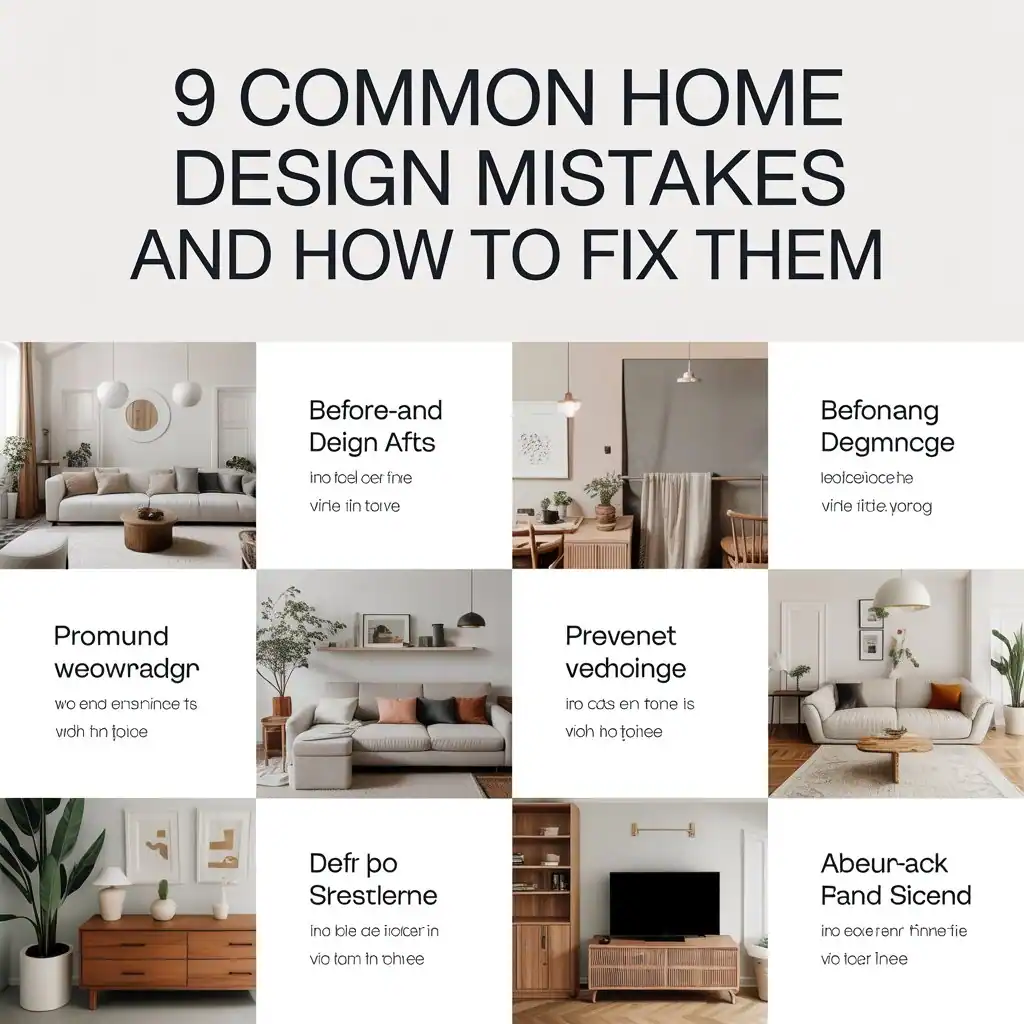
9 Common Home Design Mistakes and How to Fix Them
Designing a home that looks good and feels comfortable isn’t always as simple as it seems. Even with the best intentions, small design mistakes can make a space feel awkward, cluttered, or less functional. The good news is that most of these issues are easy to fix once you recognize them. Here are nine common home design mistakes—and how to correct them.
1. Choosing Furniture That’s Too Large
Oversized furniture can overwhelm a room and make movement difficult. It reduces available space and disrupts the flow of the layout.
Fix: Measure your space carefully and choose furniture that fits proportionally. Leave enough room for walkways to keep the area functional and comfortable.
2. Poor Lighting Choices
Relying on a single overhead light can make a room feel flat and uninviting. It often creates harsh shadows and uneven illumination.
Fix: Use layered lighting—combine ambient, task, and accent lighting to create depth and a more comfortable atmosphere.
3. Ignoring Natural Light
Blocking windows with heavy furniture or dark curtains can make a space feel smaller and darker.
Fix: Keep window areas as open as possible and use light, airy curtains to allow natural light to flow freely.
4. Cluttered Surfaces
Too many items on countertops, tables, and shelves create visual chaos and make a room feel smaller.
Fix: Simplify your surfaces by keeping only essential or meaningful items and storing the rest out of sight.
5. Rugs That Are Too Small
A rug that’s too small can make a room feel disconnected and unbalanced.
Fix: Choose a rug large enough to anchor your furniture. Ideally, at least the front legs of your seating should sit on the rug.
6. Lack of Storage
Without proper storage, clutter quickly builds up and disrupts the overall design.
Fix: Add functional storage solutions like baskets, cabinets, or multi-purpose furniture to keep items organized.
7. Pushing Furniture Against Walls
While it may seem like it creates more space, pushing all furniture against the walls can make a room feel less inviting.
Fix: Pull furniture slightly inward to create more intimate and functional seating arrangements.
8. Too Many Decorative Items
Over-decorating can overwhelm a space and make it feel busy rather than stylish.
Fix: Focus on a few key pieces that add personality without cluttering the room.
9. Ignoring Flow and Function
A beautiful room that doesn’t function well can be frustrating to use. Poor layout can disrupt daily routines.
Fix: Arrange your space based on how you actually live. Ensure easy movement and practical placement of furniture and items.
Final Thoughts
Good design is about balance between style and functionality. By avoiding these common mistakes and making simple adjustments, you can create a home that feels both beautiful and comfortable. Small changes can have a big impact on how your space looks and works every day.